

For years, the Spurs searched for the foundation of their post-Tim Duncan era. Now, they may have found something even more modern: a positionless, oversized, two-way backcourt built for the future of basketball. Dylan Harper and Stephon Castle are already flashing the traits of elite playoff creators before either has entered their prime, giving San Antonio a rare combination of offensive control, defensive versatility, and long-term upside. Add Victor Wembanyama to the equation, and the Spurs suddenly possess one of the most unique young trios the NBA has ever seen.
Why this duo is uniquely dangerous
Most elite young backcourts historically have had a weakness:
- Small guards (Ja/Bane, Garland/Mitchell)
- Defensive limitations (Trae/Dejounte)
- Redundant skill sets
- Lack of rim pressure
- Lack of positional versatility
Castle + Harper potentially solve all of those issues simultaneously.
| Trait | Castle | Harper | Why it matters |
|---|---|---|---|
| Size | 6’6 combo guard | 6’6 jumbo creator | Switchability + playoff scalability |
| Rim pressure | Excellent | Elite | Creates efficient offense |
| Defensive upside | Elite POA defender | Strong tools + instincts | Two-way playoff viability |
| Secondary playmaking | Very good | Advanced | Shared initiation |
| Pace control | Strong | Elite | Halfcourt playoff offense |
| Age curve | 21 | 20 | Massive developmental runway |
Dylan Harper
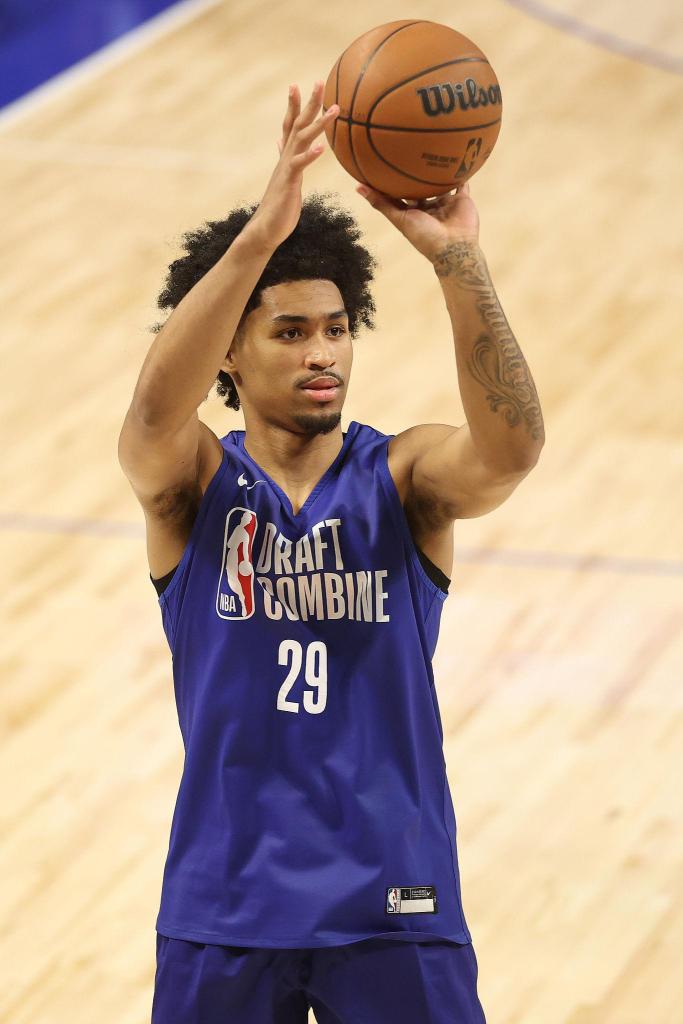
Harper’s statistical profile is ridiculously aligned with modern superstar initiators. Harper’s ability to put pressure on the rim is what separates him from other young guards.
That matters because rim pressure is the single most scalable offensive skill in postseason basketball.
His game analytically mirrors jumbo creators like:
- Cade Cunningham
- Jalen Williams
- Bigger Jalen Brunson archetypes
- Even some Shai-style tempo manipulation
One analytics breakdown cited Harper producing 1.18 PPP as a PNR ballhandler, a figure that ranks among the top playmakers.
Pace manipulation
Neither Harper nor Castle relies on pure burst.
That is actually a good thing historically.
Players who create with:
- deceleration
- strength
- footwork
- angle creation
- body control
tend to age better and translate better in playoff environments.
One under-discussed element in Harper’s game is how advanced his decision-making already is for a 19-year-old jumbo guard.
High-assist creators with low turnover tendencies and elite rim efficiency are historically rare archetypes.
Stephon Castle
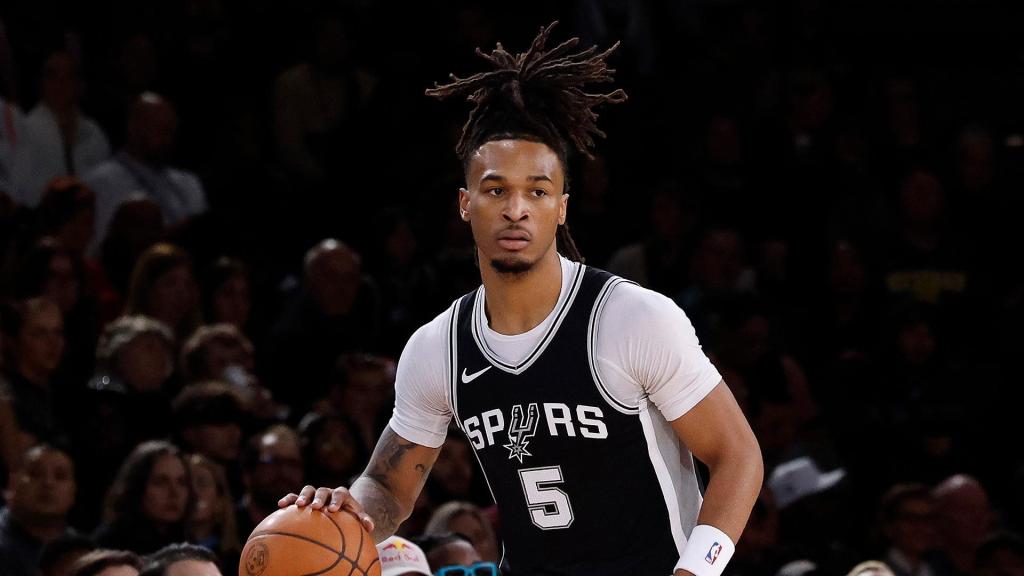
Castle is the stabilizer.
Harper projects as the offensive centerpiece.
Castle projects as a two-way weapon.
That combination is terrifying.
Castle’s development has already shown:
- high-level POA defense
- switch versatility
- secondary creation
- transition pressure
- connective playmaking
The real argument is in the matchup data.
Castle has held several elite players well below their normal efficiency in direct matchup samples:
- Luka Doncic — 33.3%
- Donovan Mitchell — 30.0%
- Devin Booker — 42.9%
- Shai Gilgeous-Alexander — 42.9%
- Franz Wagner — 23.5%
The advanced metrics back that up, too:
- Spurs allow 4.7 fewer points per 100 possessions with Castle on the floor defensively
That’s the differentiator for the Harper/Castle argument. Most young offensive backcourts become dangerous eventually.
Very few start with:
- a jumbo offensive initiator (Harper)
AND - a potential All-Defense perimeter eraser (Castle)
That’s why their ceiling is so unusual.


Leave a Reply