
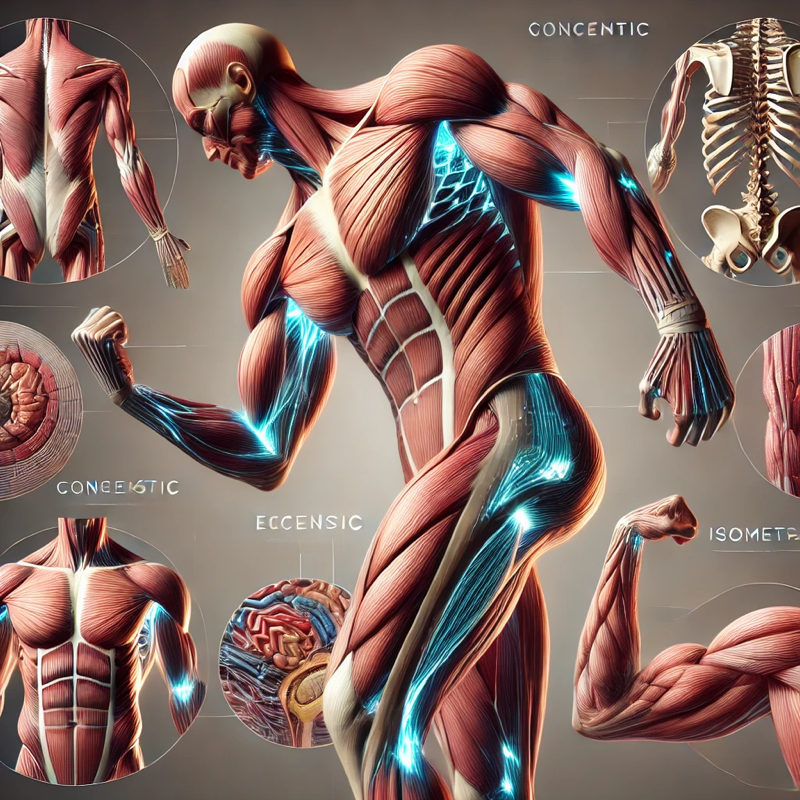
One of the common misconceptions when training in sport is that “weight/ strength training will have a negative impact on my basketball (specific) skills”. There is some truth to that, I believe at the youth level we should emphasis body weight training, so players get stronger within their own body first. Youth players must learn the biomechanics of their body before they strength train, and most importantly we do not want to mess up any growth plates by training to heavy.
The Basics of “Muscle Contraction”
1. Concentric (Shortening Phase)
• Feels like: A gradual “tightening” or “bunching up” of the muscle fibers as they shorten under tension.
• Example: Curling a dumbbell in a bicep curl—the biceps peak and harden as they bring the weight up.
• How to Improve Feeling It: Slow down the rep, squeeze at the top, and don’t just move the weight—actively flex the muscle.
2. Eccentric (Lengthening Phase)
• Feels like: A controlled stretching sensation with tension. Not a passive lowering, but an active resistance to the weight pulling your muscle apart.
• Example: Lowering a dumbbell from a bicep curl—you feel a deep stretch in the biceps as they lengthen.
• How to Improve Feeling It: Lower the weight under control (3-4 seconds), keep tension on the muscle, don’t let gravity do the work.
3. Isometric (Static Hold)
• Feels like: A sustained, burning tightness as your muscle holds against resistance.
• Example: Pausing at the midpoint of a squat or holding the peak contraction in a bicep curl.
• How to Improve Feeling It: Incorporate pauses at different points in the rep, focus on squeezing the muscle.
*For basketball specific training “isometric” holds are the most translatable because they require endurance.
What Each Muscle Feels Like When Contracting
1. Chest (Pecs)
• Sensation: A deep, inward squeeze as if trying to “hug” your chest muscles together.
• Best Cue: Imagine trying to bring your upper arms together (not just moving the weight).
2. Back (Lats, Traps, Rhomboids)
• Sensation: A firm, broad tension across the upper back with a deep contraction when fully engaged.
• Best Cue: Pull with your elbows, not your hands, and squeeze your shoulder blades together.
3. Biceps
• Sensation: A tight, ballooning feeling in the upper arm as the muscle bunches up.
• Best Cue: Try to “crush” the biceps at the top of the curl.
4. Triceps
• Sensation: A tight stretch in the back of the arm during the eccentric, followed by a dense contraction when locked out.
• Best Cue: Think about straightening your arm forcefully, not just moving the weight.
5. Shoulders (Delts)
• Sensation: A deep burn and isolated tension, especially in lateral raises.
• Best Cue: Lift with your elbows, not your hands.
6. Quads
• Sensation: A deep burn and tightness at the top of a squat or leg extension.
• Best Cue: Focus on pushing through the quads, not just standing up.
7. Hamstrings
• Sensation: A deep stretch on the eccentric and a strong contraction in the curl.
• Best Cue: Imagine curling your heels to your glutes.
8. Glutes
• Sensation: A dense, squeezed feeling in the upper glutes when locked out.
• Best Cue: Drive through the hips and hold the contraction at the top.
9. Calves
• Sensation: A tight cramping feeling when fully contracted.
• Best Cue: Push through the ball of the foot and hold the contraction.
How to Improve the Mind-Muscle Connection
• Slow Down Your Reps → Feel the tension.
• Use Lighter Weights → If you can’t feel the muscle, drop the weight.
• Pre-Exhaust with Isometrics → Squeeze the muscle before starting.
• Use Internal Cues → Visualize the muscle shortening.
• Eliminate Momentum → Keep constant tension.
 HoopTalkTV
Leave a comment